France’s 1998 World Cup semifinal comeback against Croatia
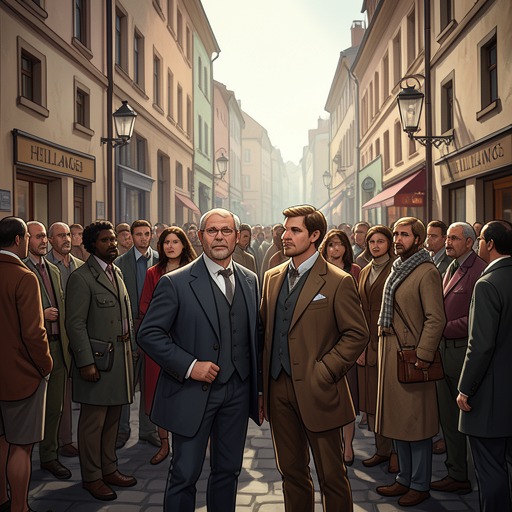
And Their Children After ThemFrance’s 1998 World Cup semifinal comeback against Croatia is both a sporting reversal and a brief vision of collective belonging. As the French crowd moves from stunned silence to ecstatic celebration, Anthony and Hacine—whose past is marked by antagonism—stand in the same bar and respond to the same goals. The match’s significance lies not only in France reaching the final, but in the sudden, fragile unity the victory makes imaginable.
A Town Gathered Around the Match
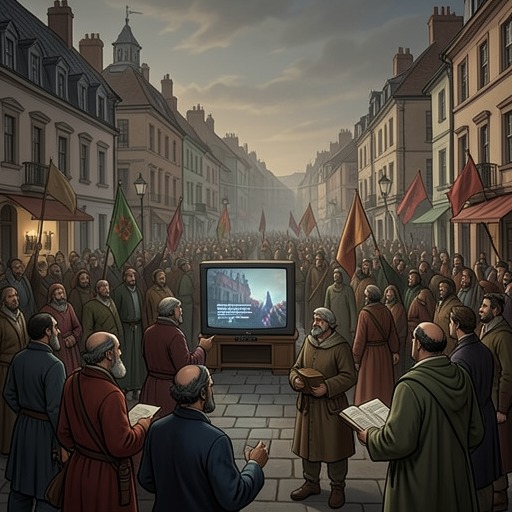
At quitting time, Hacine’s workmates head to the large screen at Renardière stadium, but he declines to join them and rides his motorcycle around town. The bars are packed, fans overflow onto the sidewalks, and the surrounding countryside seems to have poured into Heillange. With only one television channel, La Une, broadcasting the game, the match has become a shared focus for people who might otherwise be scattered across different streets and venues. Hacine eventually reaches L’Usine, a bar he has not visited since an earlier accident, a long time before.
Anthony’s route to the same place is different. Around five o’clock he visits his cousin, carrying boxed wine. His cousin has recently built a six-room house near the tennis courts, secured a permanent job with Kleinhoffer, and taken out a bank loan. The new home is not quite finished: electrical wires still protrude from the walls, a ladder is needed to reach the upstairs, and the couple are sleeping in the living room because the stairs are difficult for Nath. Its newness and unfinished edges give the afternoon an ordinary, domestic scale before the match draws Anthony back into the public celebration.
As the game advances, Anthony and his cousin race into town looking for a place to watch. There are no parking spaces; cars jam the long streets, every bar and terrace is full, and they leave the car double-parked. Near the blast furnace, with halftime ending, they hurry into L’Usine. Anthony recognizes Rudi and sees Manu there as well. The bar becomes the setting where the match’s national drama converges with the personal history shared by Anthony and Hacine.
Croatia Scores First
Early in the second half, Davor Šuker takes a long pass from Asanović and scores. The goal comes in the forty-sixth minute, just after the teams return from the locker rooms. The narration makes the shock feel collective: millions watching at home are stunned, while Anthony sets down his beer and takes his head in both hands. The gesture is described as dramatic because hope has become unusually precious. The goal leaves the crowd in L’Usine, and the country beyond it, momentarily suspended in disappointment.
The scene dwells on Šuker as he runs in celebration, describing his sharp features and the red squares on his white jersey. That concentrated image gives the opposing scorer a vivid presence at the very moment France’s prospects seem most vulnerable. The match is not presented as a smooth progression toward an expected victory: Croatia’s goal interrupts the crowd’s confidence, and the gap between disappointment and renewed hope becomes part of the event’s force.
Thuram’s Two Goals and the Reversal
At the moment Šuker scores, Hacine enters L’Usine, orders a beer, and turns to see whether he recognizes anyone. He and Anthony recognize one another. Hacine then turns his attention to the television, where the game is in its forty-seventh minute. Lilian Thuram, noted as a player who never scores, works his way up the pitch and equalizes. The response is immediate: the bar erupts, a table is knocked over, beer spills, and spectators jump, shout, and embrace. Hacine raises both fists. Anthony, overcome by the moment, shakes him in celebration.
The encounter matters because the match briefly changes what Anthony and Hacine do with their shared space. Anthony later sees Hacine sitting at the bar and explicitly decides that the night is not the time for them to fight. The old antagonism has not been resolved, but it does not govern this particular moment. When Thuram scores again in the seventieth minute, the match’s reversal becomes secure: Anthony and Hacine have celebrated the equalizer together, and France is on its way to the final.
Victory and Its Limits
As the match continues, L’Usine grows louder and more intoxicated. Beer circulates freely, people smoke and call to one another across tables, and Anthony drinks with his cousin and buys rounds for Rudi. Rudi, looking especially haggard, shouts encouragement at every action by Les Bleus; Hacine is drinking hard as well. These details place the euphoria in a crowded, imperfect social world rather than an abstract patriotic tableau. The spectators are individuals with their own circumstances, but the match draws their attention and excitement into a common rhythm.
After Thuram’s second goal, the narration describes the crowd as suddenly joined together, with no room for outsiders or aberrations. It casts the unity as a fantasy in which history, the dead, and debts appear temporarily erased. That language makes the celebration powerful but also bounded: the match does not settle the conflicts or obligations that preceded it; it suspends them for the duration of a shared public feeling. When the final whistle confirms France’s victory and place in the final, Heillange spills into the streets. Cars jam the roads, flags wave from windows and long poles, faces are painted blue, white, and red, and people toast one another. The town seems to rediscover its strength after decades of bad luck, as if the win could sweep away the crisis. The match thus offers a vivid, short-lived image of national fraternity, while the surrounding economic hardship remains the condition against which that image shines.